 US National Parks Map Directory
Big Bend
The big bend of the Rio Grande, TX
About
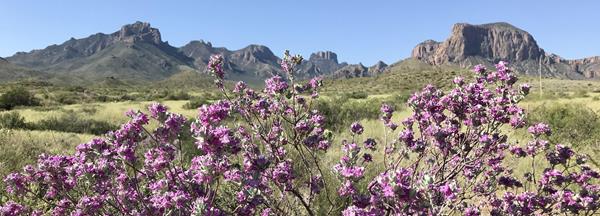
There is a place in Far West Texas where night skies are dark as coal and rivers carve temple-like canyons in ancient limestone. Here, at the end of the road, hundreds of bird species take refuge in a solitary mountain range surrounded by weather-beaten desert. Tenacious cactus bloom in sublime southwestern sun, and diversity of species is the best in the country. This magical place is Big Bend...
Directions
Several highways lead to Big Bend National Park: TX 118 from Alpine to Study Butte or FM 170 from Presidio to Study Butte (then 26 miles east to park headquarters) or US 90 or US 385 to Marathon (then 70 miles south to park headquarters). Distances between towns and services are considerable. Be sure you have plenty of gas, food, water, and supplies for your trip. There are no electric vehicle charging stations in Big Bend National Park. The closest EV charging station is 130 miles away in Fort Stockton.
Weather Info
Big Bend is a desert park, so be prepared for extreme conditions. SPRING: From February through April the park abounds with pleasant and comfortable temperatures. SUMMER: May through September is very hot. Temperatures will exceed 100 degrees in the lower elevations by late morning, and often exceed 110 along the Rio Grande. Afternoon thunderstorms can be a welcome respite. WINTER: October through January temperatures are cooler; the weather can quickly turn cold at any time during these months.
Photos
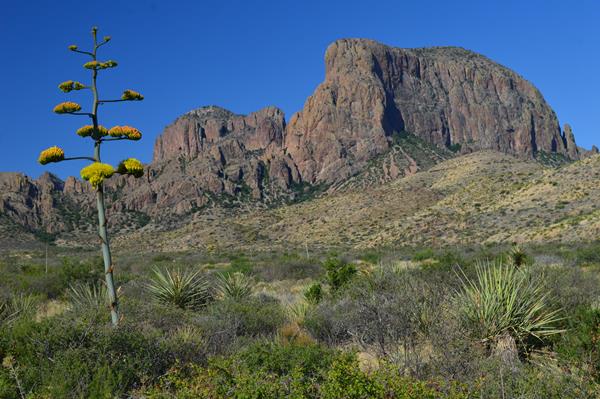
Century Plants bloom only once in their long lives.
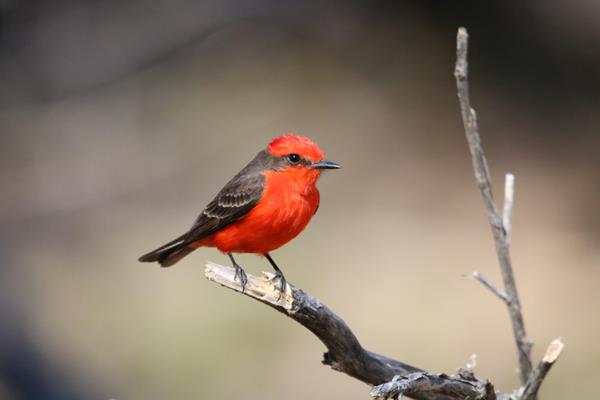
Big Bend is home to over 450 species of birds!
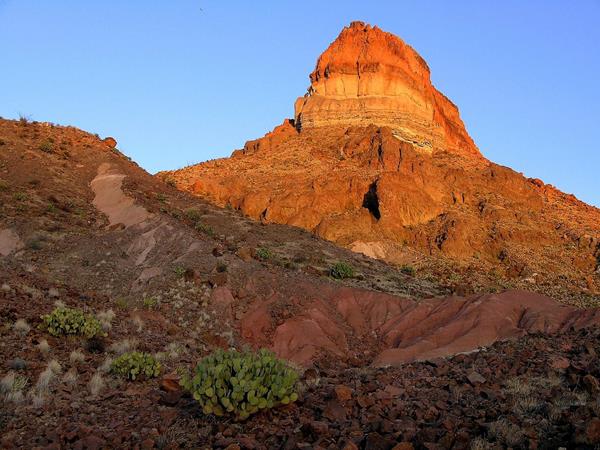
Volcanic features abound near Castolon
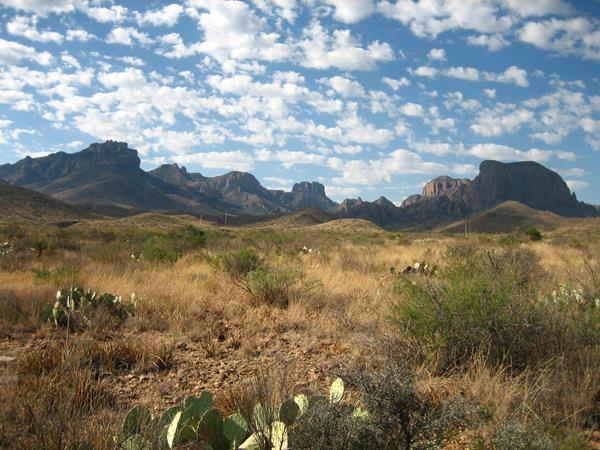
Big Bend is a prime example of Chihuahuan Desert
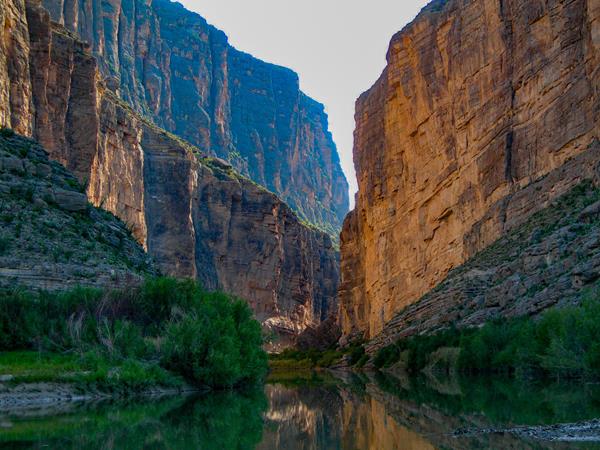
Santa Elena Canyon
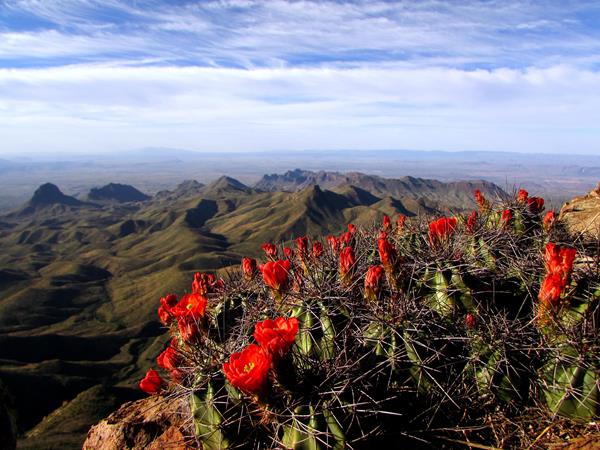
Big Bend is a place of expansive views
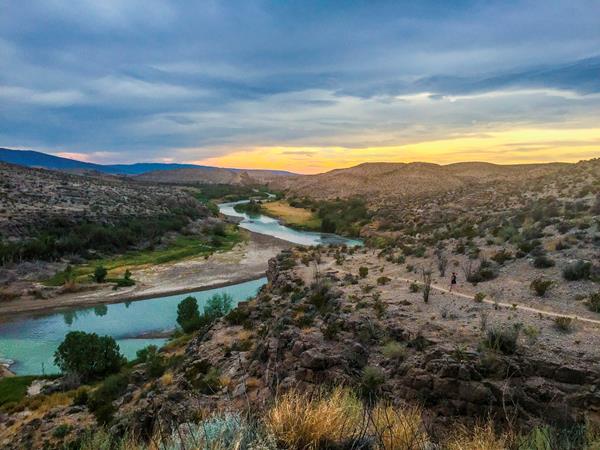
The Rio Grande serves as the park's southern boundary
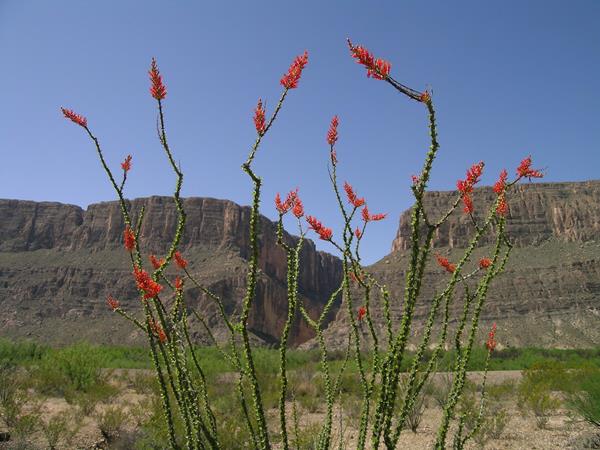
When ocotillo bloom, they transform the desert
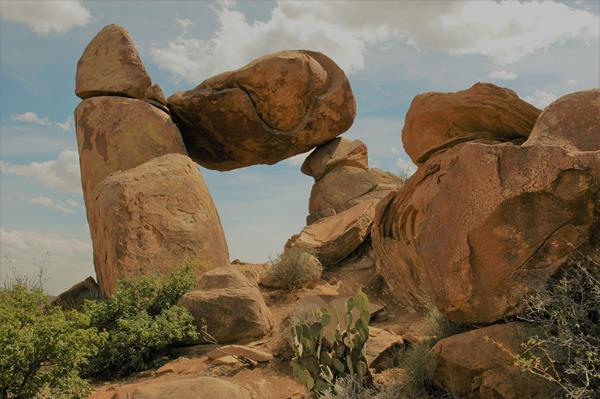
The balanced rock is a popular day hiking destination.
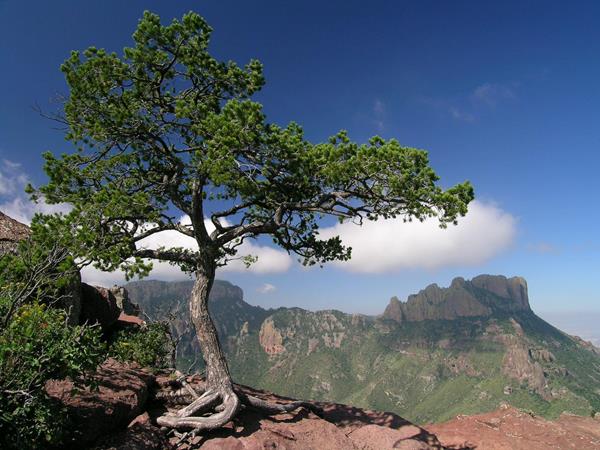
Hiking the Lost Mine Trail affords many amazing views.
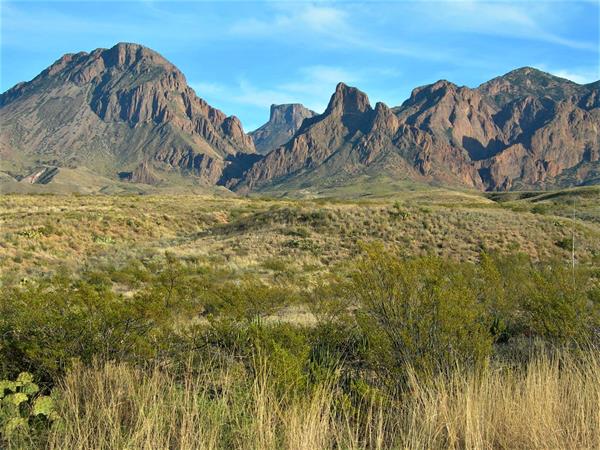
The Chisos Mountains rise above the desert