 US National Parks Map Directory
Mount Rainier
Ashford, Enumclaw, Packwood, Wilkeson, WA
About
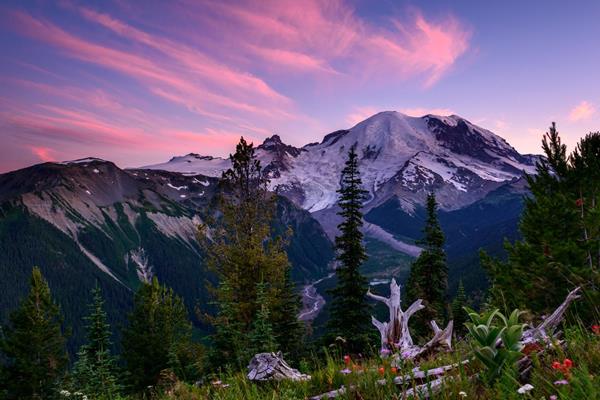
Ascending to 14,410 feet above sea level, Mount Rainier stands as an icon in the Washington landscape. An active volcano, Mount Rainier is the most glaciated peak in the contiguous U.S.A., spawning five major rivers. Subalpine wildflower meadows ring the icy volcano while ancient forest cloaks Mount Rainier’s lower slopes. Wildlife abounds in the park’s ecosystems. A lifetime of discovery awaits.
Directions
Mount Rainier National Park is located in west-central Washington state. Several major cities in Washington- Seattle, Tacoma, and Yakima- and Portland, Oregon, are within 200 miles of the park. For GPS to Nisqually Entrance use: 39000 State Route 706 E, Ashford, WA 98304.
Weather Info
Weather patterns at Mount Rainier are strongly influenced by the Pacific Ocean and elevation. The climate is generally cool and rainy, with summer highs in the 60s and 70s. While July and August are the sunniest months of the year, rain is very likely in spring, fall, and winter. Visitors should be aware that mountain weather is very changeable. In the higher elevations, like Paradise, winter can last from November to May with many feet of snow on the ground.
Photos
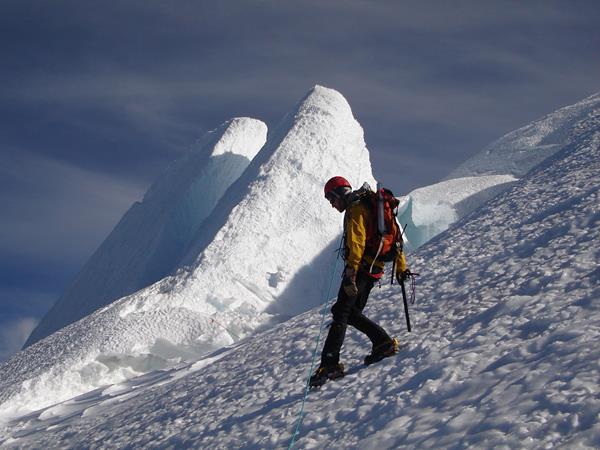
Summiting Mount Rainier involves climbing a volcano, scaling glaciers, dealing with high elevations and much more. Almost 10,000 people a year attempt to summit.
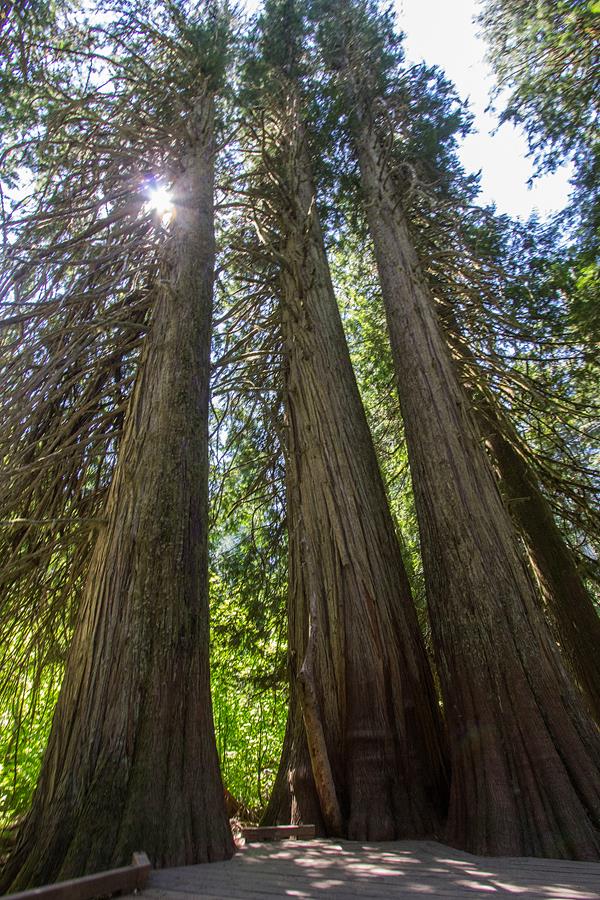
With some of the few remaining old-growth forests in the Cascade Mountains, Mount Rainier National Park protects native plants great and small in places like the Grove of the Patriarchs.
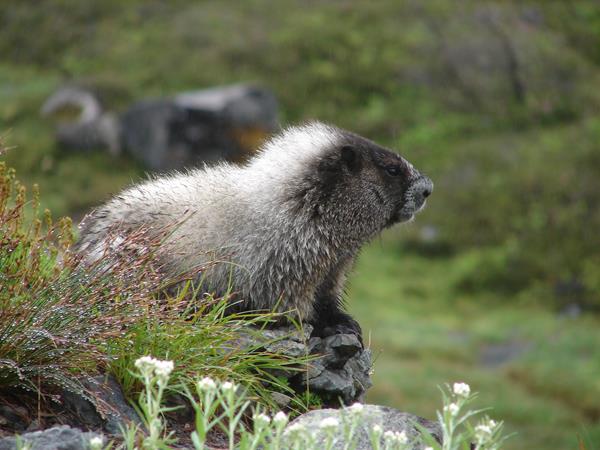
From small amphibians and hoary marmots to the black bears and elk, many animals call the wild places of Mount Rainier home.
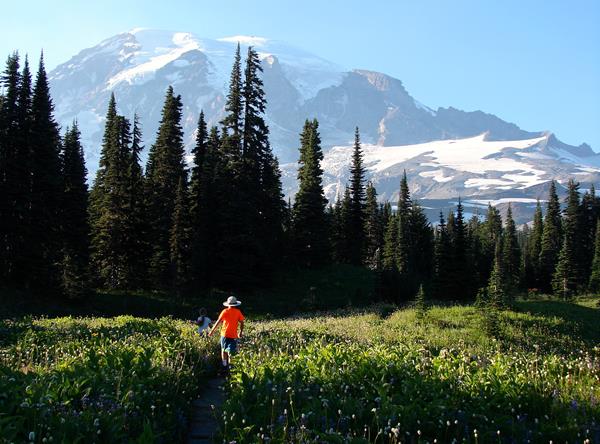
Enjoying the outdoors through recreation is a big part of many visitors' experiences.
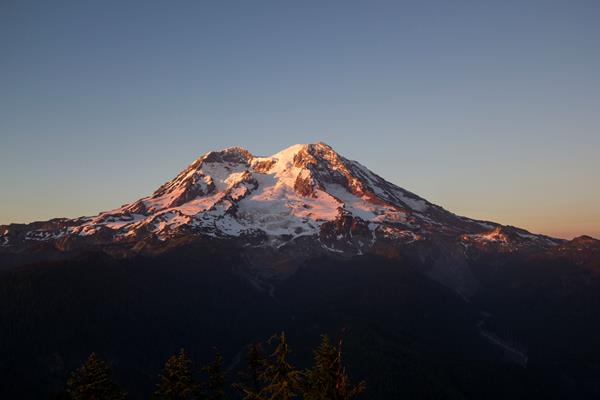
Every scenic overlook shows a different side of Mount Rainier. Viewed from Gobblers Knob Lookout at sunset, the glaciers covering the mountain turn pink and gold.
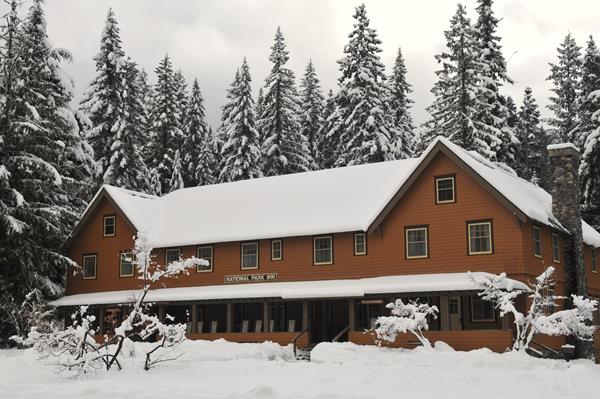
For thousands of years, people have traveled up to, over, and around Mount Rainier. Today the park strives to preserve this history while providing a chance for new generations to find their own adventures.
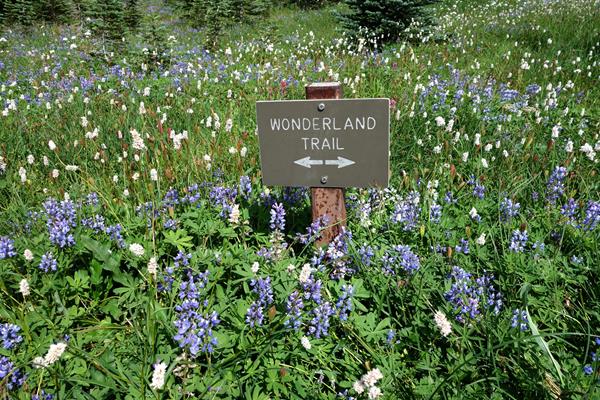
Both the Wonderland Trail and subalpine meadows encircle Mount Rainier. Summertime blooms splatter the hillsides with color.
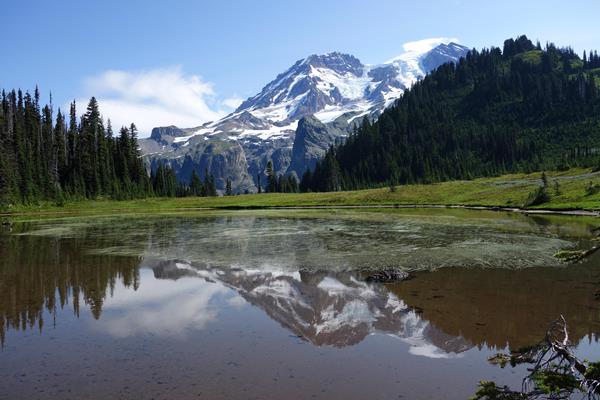
Aurora Lake in Klapatche Park on the west side of Mount Rainier.