 US National Parks Map Directory
Zion
Springdale, UT
About
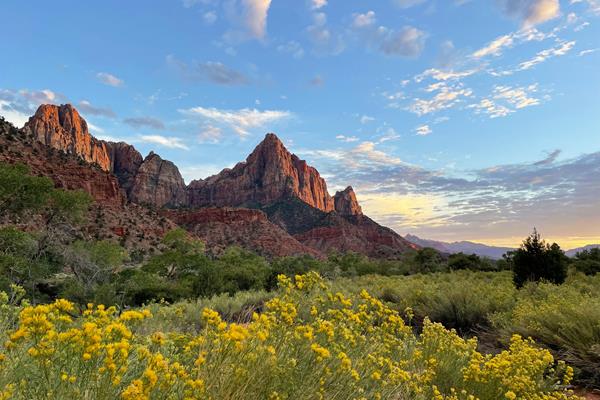
Follow the paths where native people and pioneers walked. Gaze up at massive sandstone cliffs of cream, pink, and red that soar into a brilliant blue sky. Experience wilderness in a narrow slot canyon. Zion’s unique array of plants and animals will enchant you as you absorb the rich history of the past and enjoy the excitement of present day adventures.
Directions
Zion National Park's main, south entrance and administrative offices are located near Springdale, Utah You may drive yourself on all open park roads except the Zion Canyon Scenic Drive. During most of the year, the Scenic Drive is accessed by shuttle bus only. Shuttles are free to ride. Board one in Springdale or at the Zion Canyon Visitor Center.
Weather Info
Zion is known for a wide range of weather conditions. Temperatures vary with changes in elevation and day/night temperatures may differ by over 30°F. In summer, temperatures in Zion National Park often exceed 100°F/38°C. Zion experiences monsoons from mid-July into September that result in an increased risk of flash floods. Always be aware of the threat of storms and lightning and be prepared for a wide range of weather conditions. Winters are generally mild.
Photos
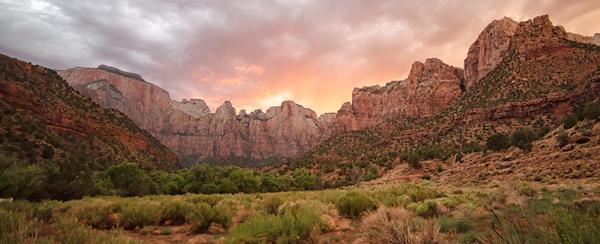
The Towers of the Virgin in Zion Canyon
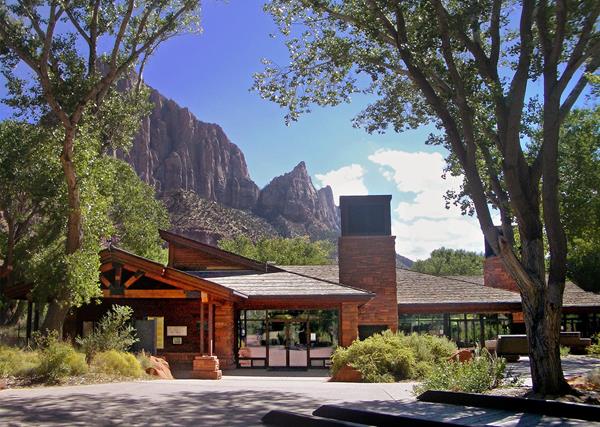
The Zion Canyon Visitor Center is a great place to stop to learn about the park!
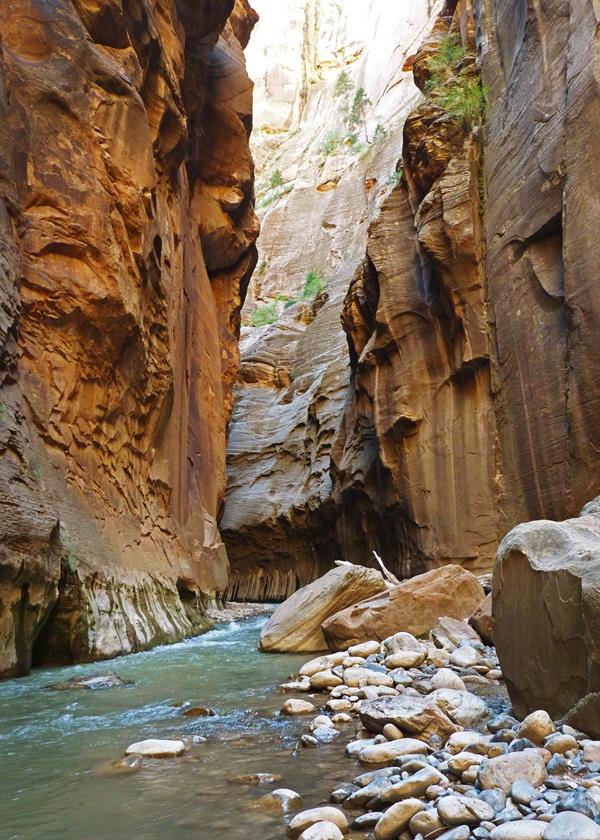
The Narrows can be accessed at the end of Riverside Walk, just follow the river.
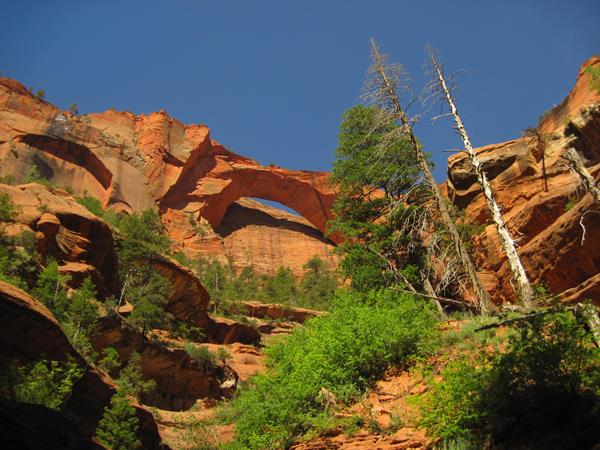
Deep in Zion's Wilderness site Kolob Arch, one of the largest free-standing arches in the world.