 US National Parks Map Directory
Kenai Fjords
Seward, AK
About
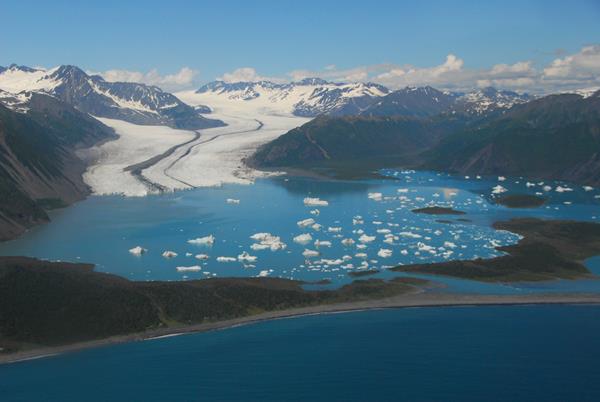
At the edge of the Kenai Peninsula lies a land where the ice age lingers. Nearly 40 glaciers flow from the Harding Icefield, Kenai Fjords' crowning feature. Wildlife thrives in icy waters and lush forests around this vast expanse of ice. Sugpiaq people relied on these resources to nurture a life entwined with the sea. Today, shrinking glaciers bear witness to the effects of our changing climate.
Directions
Kenai Fjords National Park is located just outside the town of Seward in south-central Alaska, 126 miles south of Anchorage. Even though the park is often inaccessible during the winter months, Seward is accessible year-round via the Seward Highway, a National Scenic Byway. Follow the Seward Highway (AK-1) south from Anchorage. It will become AK-9 around mile 35 (87 miles from Anchorage) with AK-1 heading to Homer and Kenai. Continue on AK-9 to Seward.
Weather Info
The weather in Kenai Fjords is difficult to predict and can change rapidly. The area generally enjoys a relatively temperate maritime climate, primarily due to the influence of warmer ocean currents that flows through the Gulf of Alaska. Summer daytime temperatures range from the mid 40s°F to the low 70s°F. Overcast and cool rainy days are frequent. Winter temperatures can range from the low 30s°F to -20°F.
Photos
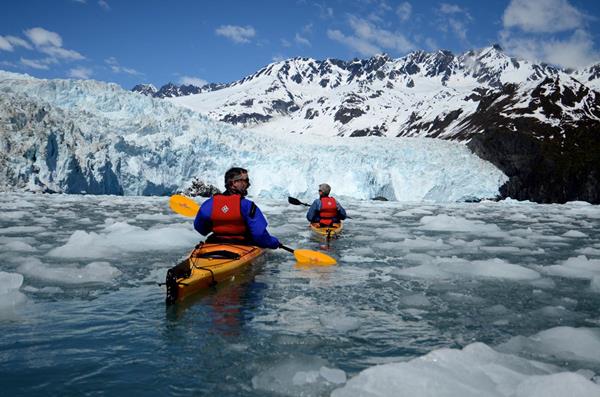
Kayakers enjoy the spectacular scenery in the fjords in Aialik Bay.
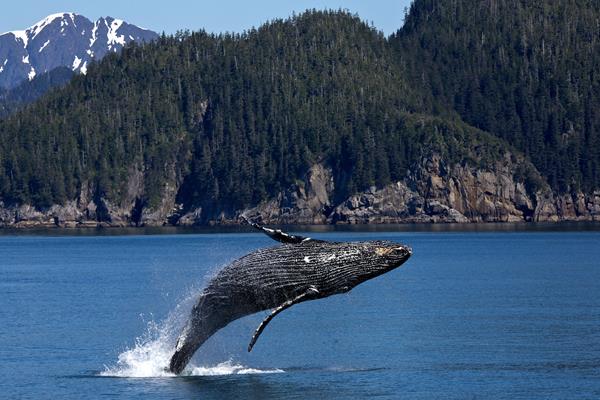
A humpback whale breaches in Kenai Fjords National Park
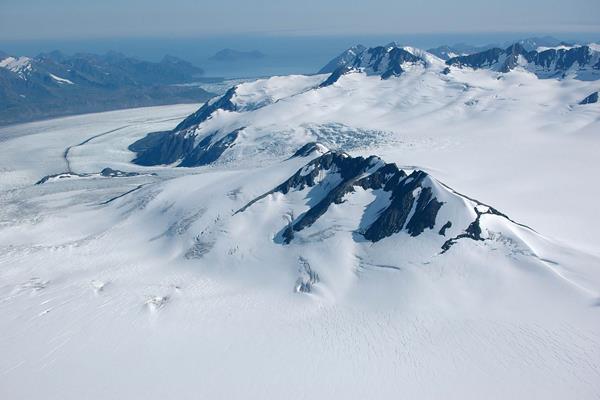
Flightseeing over the Harding Icefield provides amazing opportunities to view glaciers, like Bear Glacier, from a different perspective.
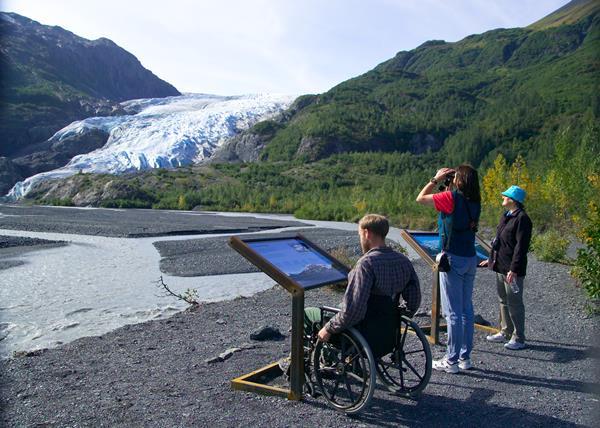
A stroll to Glacier View provides a nice overlook of Exit Glacier as part of a 1 mile accessible walk.