 US National Parks Map Directory
Everglades
Homestead, FL
About
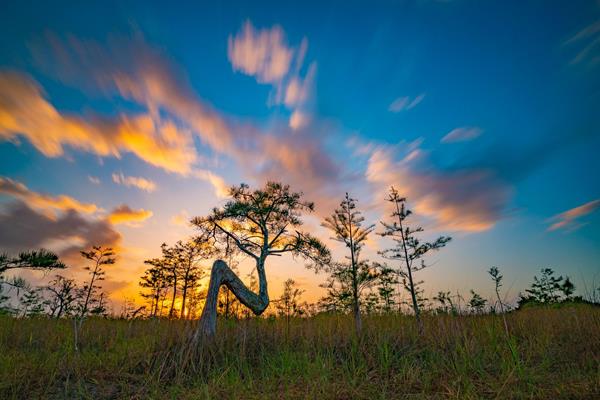
Everglades National Park protects an unparalleled landscape that provides important habitat for numerous rare and endangered species like the manatee, American crocodile, and the elusive Florida panther. An international treasure as well - a World Heritage Site, International Biosphere Reserve, a Wetland of International Importance, and a specially protected area under the Cartagena Treaty.
Directions
Directions to Ernest Coe Visitor Center 40001 State Road 9336, Homestead, FL 33034 Visitors coming from the Miami area and points north should take the Florida Turnpike (Route 821) south until it ends merging with U.S. 1 at Florida City. Turn right at the first traffic light onto Palm Drive (State Road 9336/SW 344th St.) and follow the signs to the park. Visitors driving north from the Florida Keys should turn left on Palm Drive in Florida City and follow the signs to the park.
Weather Info
The climate in Florida is known to be mild and sunny.The average annual temperatures for South Florida and the Keys range from 74° to 77°F (23° to 25°C). There are two seasons at the Everglades National Park: the wet season and the dry season. The wet season runs from Mid-May to November and the dry season runs from December to mid-May.
Photos
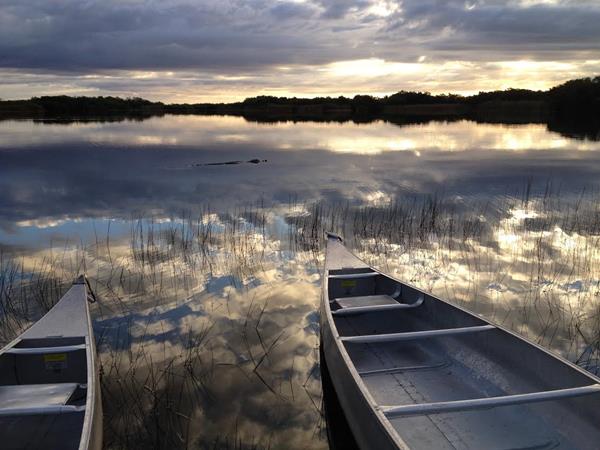
A meeting ground of marsh and mangrove environments. You may see alligators, wading birds, turtles, and fish.
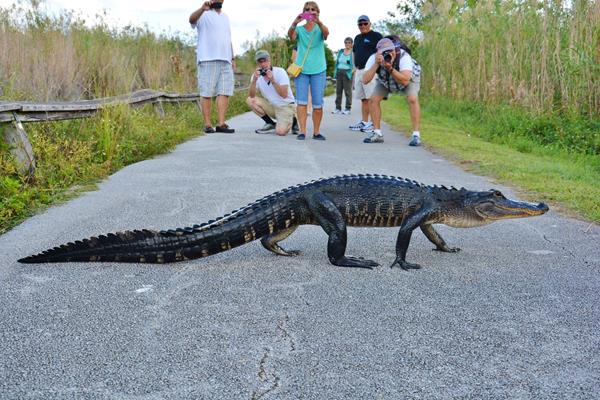
An American Alligator high walks the Anhinga Trail.
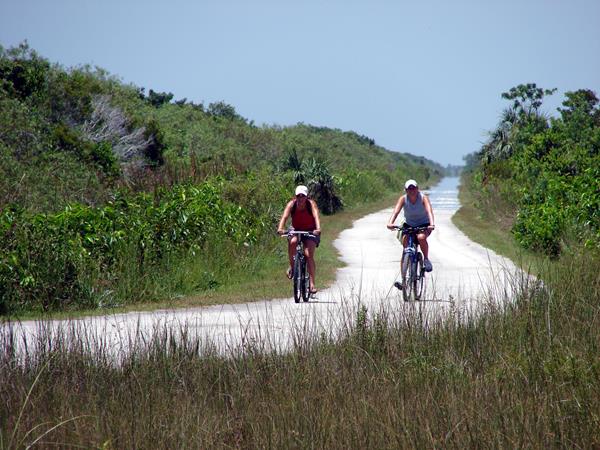
Biking is a great way to experience the quiet beauty of the Everglades.
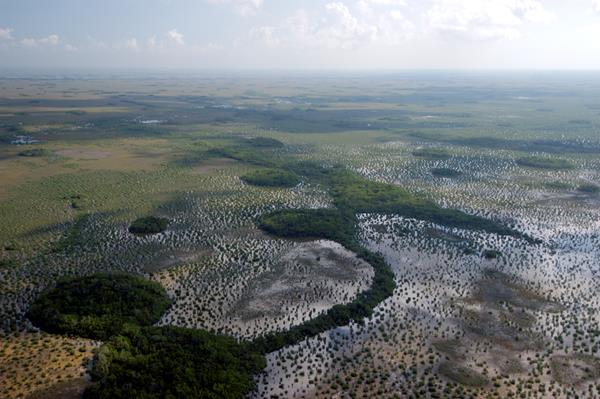
An aerial view of the landscape transition from Sawgrass to Florida Bay.
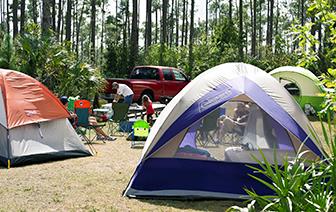
Long Pine Key Campground is open seasonally from November through May. It is located seven miles (11 km) from the main entrance, just off the main road.